Posted by All This Wood on Jan 23rd 2018
The Beauty of Cork
Ever since I first worked with cork in the building industry years ago, I have been amazed by its many advantages.
A truly renewable material
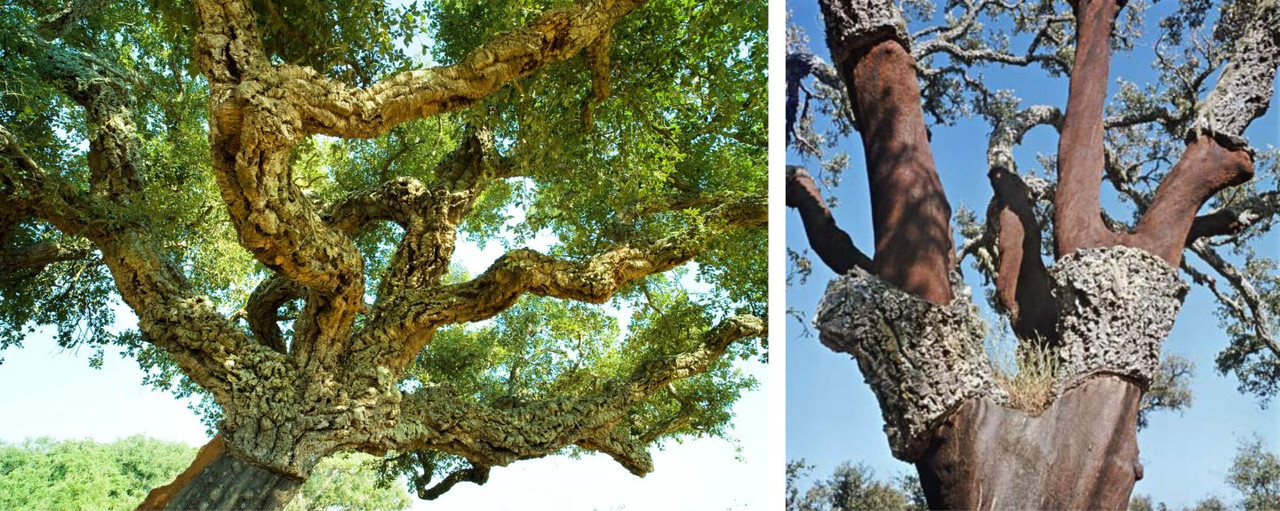
Unlike other trees, the cork oak (Quercus suber) is a truly renewable resource. Cork oaks are harvested about every ten years, but the trees are never cut down. Cork forests are left largely to nature, and the trees live on average more than 200 years. Harvesters remove only the bark, about 5–6 feet of it, starting one or two feet above the ground.
From bark to fabric
Freshly removed bark is soft and very elastic. The cork is broken up, compressed and glued into sheets that are used for many purposes: thermal and sound insulation, textiles and, most famously, wine stoppers.
In recent years cork fabric has become popular in fashion, which is no surprise given how durable it is, how easily it cuts and sews, and of course its beauty.
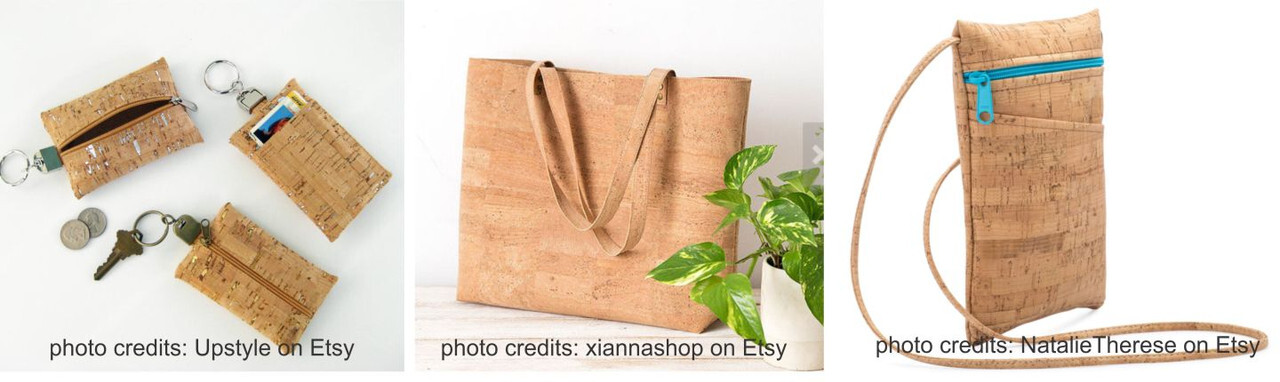
Cork fabric, also called cork leather
Cork fabric is very light, flexible, easy to fold and eco-friendly. It comes in a variety of colors and grain patterns.
It also engraves beautifully, and we love using it for laser-cut product labels: a great finishing touch for handmade, knitted and crocheted items, bags, wallets and clothing for babies, kids and adults.
Care tip: cork labels are not made for the washing machine. Remove them before washing the item they are sewn on.
Our cork labels are a unique, quality product and an affordable way to build your brand and promote your small business.
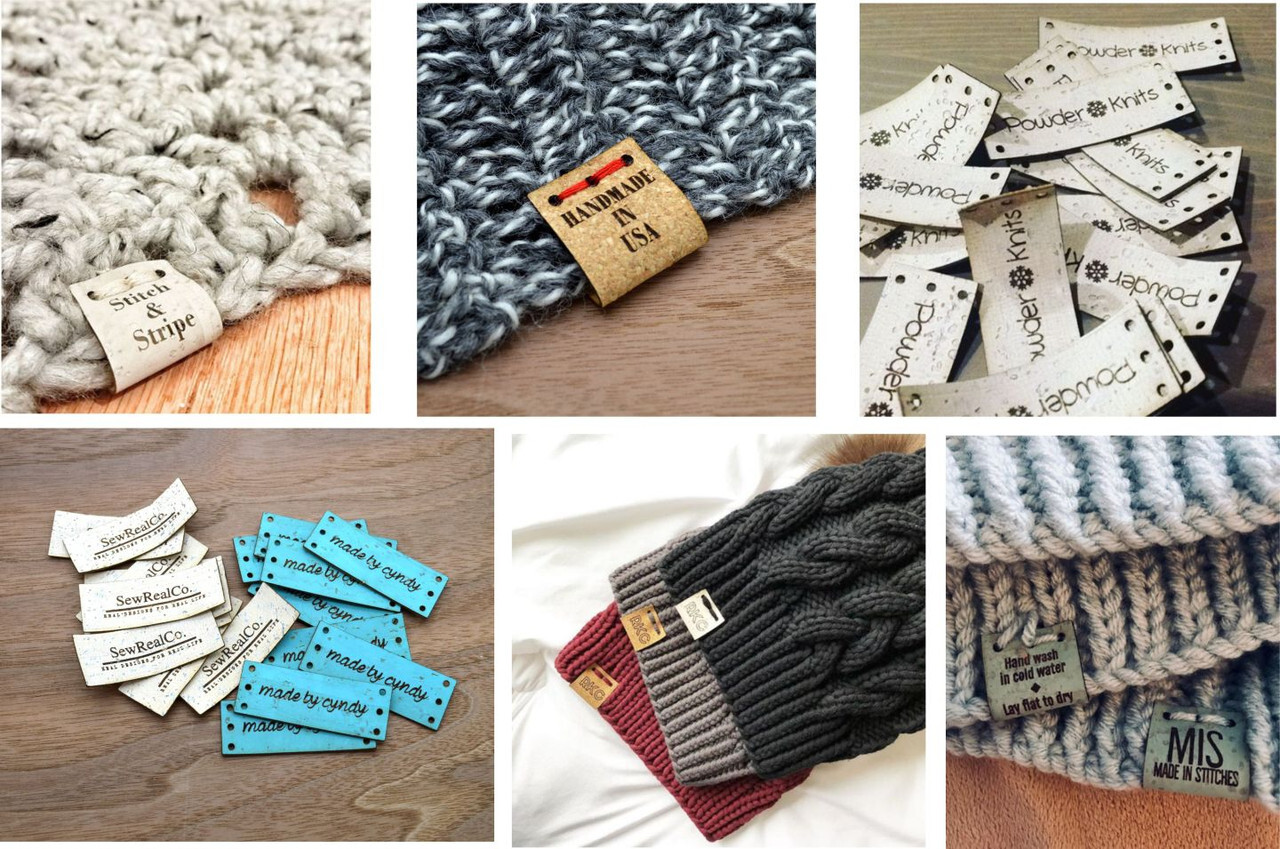
See our custom cork labels, in Natural, Concrete and Cream, which you can design online with your own logo or text. Questions? Email us at info@allthiswood.com.